
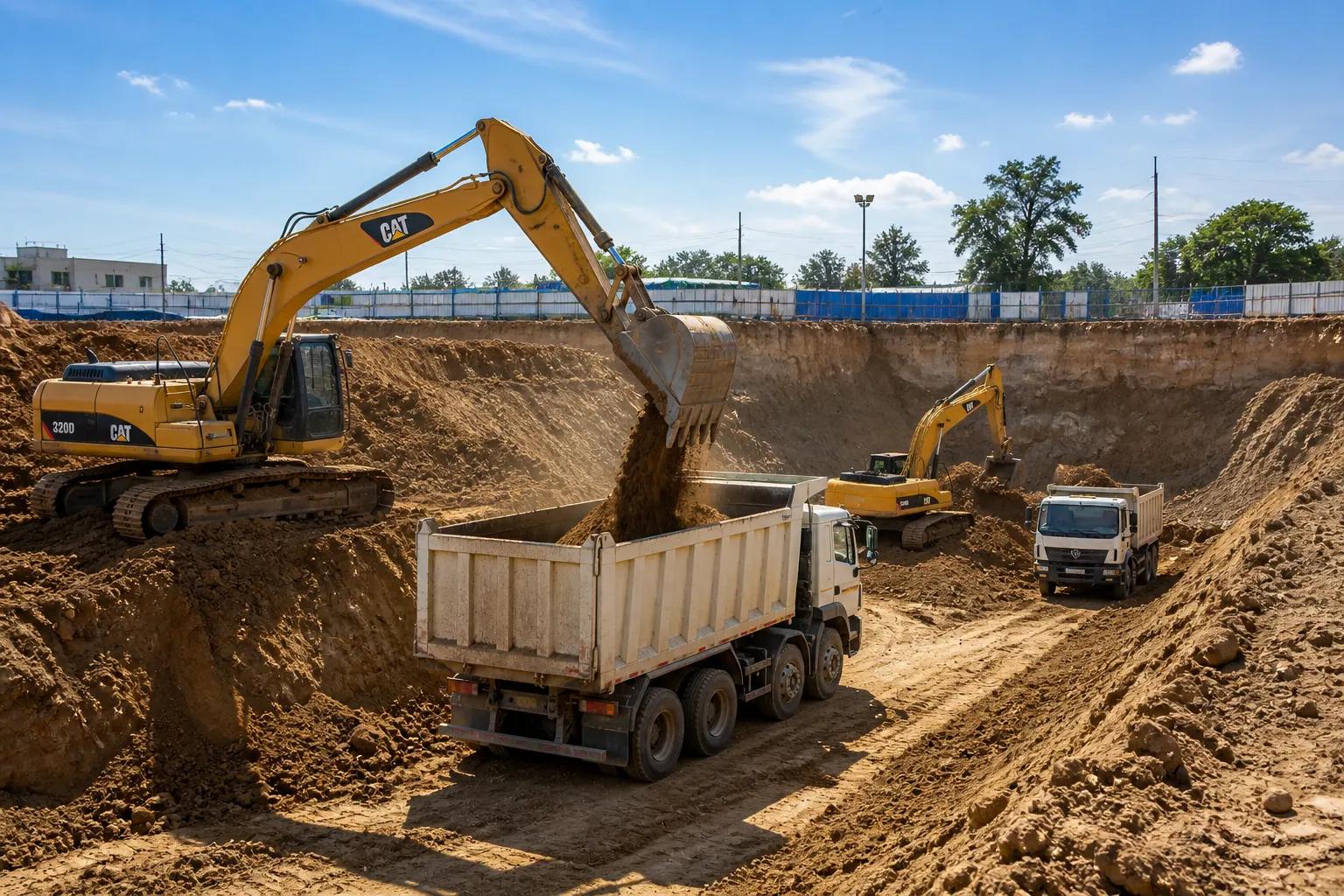
Basement construction has become an integral part of modern residential, commercial, and industrial developments in Haryana. With increasing urbanization and limited land availability, developers are utilizing underground spaces for parking, storage, utility services, and commercial purposes. However, basement structures are exposed to significant soil pressure, groundwater infiltration, and excavation-related risks, making basement stabilization a critical aspect of construction.
Basement stabilization refers to the process of strengthening and supporting excavation areas and underground structures to prevent soil movement, wall deformation, settlement, and water-related damage. Proper stabilization ensures the long-term safety, durability, and functionality of basement structures.
Understanding Basement Stabilization
During deep excavation, the surrounding soil exerts lateral pressure on retaining walls and foundation systems. If these pressures are not adequately controlled, they can lead to structural instability, soil collapse, cracks, and excessive settlement.
Basement stabilization involves implementing engineered solutions that maintain excavation safety and protect nearby structures throughout construction and the operational life of the building.
Importance of Basement Stabilization in Haryana
Haryana is experiencing rapid infrastructure growth, particularly in cities such as Gurugram, Faridabad, Panipat, Karnal, Sonipat, Rohtak, and Hisar. Many of these developments include multi-level basements and deep foundation systems.
Proper basement stabilization offers several benefits:
Prevents excavation collapse
Controls lateral soil pressure
Protects adjacent buildings and roads
Minimizes settlement risks
Improves structural safety
Reduces groundwater-related problems
Enhances the lifespan of underground structures
Without proper stabilization measures, basement projects may face severe structural and financial consequences.
Common Challenges in Basement Construction
Soil Instability
Different regions of Haryana have varying soil conditions that may not naturally support deep excavations.
Groundwater Seepage
Water ingress can weaken excavation faces and increase hydrostatic pressure on basement walls.
Deep Excavation Requirements
Modern commercial projects often require multiple basement levels, increasing stabilization demands.
Urban Construction Constraints
Construction in densely populated areas requires careful planning to avoid damage to nearby structures.
Differential Settlement
Uneven soil conditions can result in uneven movement and structural distress.
Basement Stabilization Techniques
Soil Nailing
Soil nailing involves installing steel bars into excavated slopes or walls to reinforce soil mass and improve stability. It is widely used in urban basement excavations where space is limited.
Benefits include:
Increased soil strength
Reduced excavation risks
Cost-effective support system
Faster construction
Ground Anchoring
Ground anchors are tensioned elements installed into stable ground layers to support retaining structures.
Advantages:
Enhanced wall stability
Effective load transfer
Suitable for deep excavations
Long-term structural support
Shotcreting
Shotcrete is pneumatically applied concrete used to stabilize excavation surfaces.
Benefits:
Immediate surface protection
Reduced erosion
Improved structural integrity
Compatibility with soil nailing systems
Diaphragm Walls
Diaphragm walls are reinforced concrete retaining walls constructed before excavation begins.
Advantages:
High structural strength
Groundwater control
Minimal ground movement
Ideal for deep basements
Secant and Contiguous Pile Walls
These systems use overlapping or closely spaced piles to create retaining structures around excavation zones.
Benefits:
Strong excavation support
Suitable for restricted urban locations
Effective groundwater resistance
Role of Groundwater Management
Groundwater is one of the biggest challenges in basement construction. Excessive water pressure can affect both excavation stability and long-term basement performance.
Groundwater management typically includes:
Dewatering systems
Drainage networks
Waterproof membranes
Pressure relief systems
Waterproof concrete technologies
Proper water management helps prevent leakage, dampness, and structural deterioration.
Basement Waterproofing and Stabilization
Waterproofing and stabilization work together to ensure long-term basement performance.
Effective waterproofing systems help:
Prevent seepage
Control moisture intrusion
Protect reinforcement steel
Reduce maintenance costs
Improve indoor environmental quality
Modern projects often combine stabilization measures with advanced waterproofing solutions for maximum protection.
Applications of Basement Stabilization
Basement stabilization is commonly used in:
Commercial Buildings
Shopping malls
Office complexes
Business centers
Hotels
Residential Developments
High-rise apartments
Luxury housing projects
Residential towers
Industrial Facilities
Manufacturing plants
Warehouses
Utility structures
Infrastructure Projects
Metro stations
Underground passages
Transportation hubs
Public utility facilities
Factors Affecting Basement Stabilization Design
Every project requires a customized approach based on several factors:
Soil Conditions
Detailed geotechnical investigations determine soil strength and behavior.
Excavation Depth
Deeper excavations require stronger support systems.
Groundwater Level
Water table conditions significantly influence stabilization methods.
Nearby Structures
Protection of adjacent buildings is an important design consideration.
Structural Loading
The final building loads determine foundation and support requirements.
Benefits of Professional Basement Stabilization
Working with experienced engineers and contractors provides several advantages:
Improved safety
Better construction efficiency
Reduced project risks
Enhanced durability
Compliance with engineering standards
Long-term cost savings
Professional execution ensures that all stabilization systems perform effectively throughout the structure's life cycle.
Why Choose Prime Engineer for Basement Stabilization Haryana?
Prime Engineer is a trusted name in geotechnical and foundation engineering solutions across Haryana. With extensive experience in deep excavation support and underground construction, the company provides comprehensive basement stabilization services tailored to project requirements.
Key strengths include:
Experienced engineering professionals
Advanced construction equipment
Customized stabilization solutions
Strict quality control procedures
Timely project execution
Commitment to safety and durability
Prime Engineer specializes in soil nailing, ground anchoring, shotcreting, diaphragm walls, excavation support systems, and foundation engineering services for residential, commercial, industrial, and infrastructure projects.
Conclusion
Basement stabilization is essential for the successful execution of modern construction projects in Haryana. From controlling soil movement and groundwater pressure to ensuring long-term structural safety, stabilization measures play a vital role in underground construction.
Whether developing commercial complexes, residential towers, industrial facilities, or infrastructure projects, investing in professional basement stabilization solutions ensures safe excavation, durable structures, and long-lasting performance. By adopting advanced engineering techniques and quality construction practices, project owners can minimize risks and maximize the value of their developments.

Write a comment ...